Who We Are
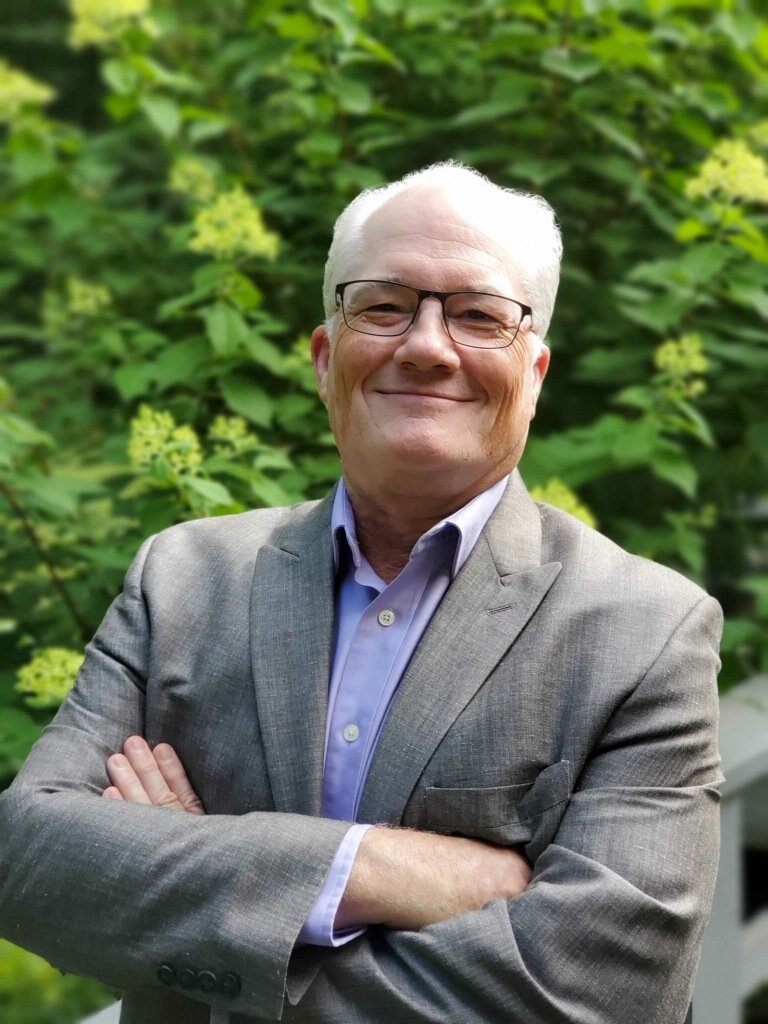
- David Jacobs-
At the same time, I served as missions chairman at our church — a role that went far beyond organizing committees. It meant getting calls in the middle of the night, leaving home at midnight to meet a couple whose car had broken down while traveling and who had no money for repairs, or showing up for families in crisis who needed food, hope, or simply someone to listen. Those years taught us both that compassion is rarely convenient, but it’s always worth showing up for. Service became our shared language — an extension of who we were together.
Later in life, my wife and I cared for both my father-in-law and mother-in-law in our home during their last years. We experienced personally the sacrificial, logistical, and emotional challenges of being caregivers — often feeling alone and uncertain in those challenges. There were nights when we were changing feeding tubes and, at the same time, processing six-inch stacks of medical bills and insurance statements. Those years gave me a deeper empathy for what families face: the exhaustion, the fear, and the determination to do what’s right even when you feel unequipped and unseen.
We both had built scientific careers, working with some of the most advanced technologies in existence. I became an owner and operator of a healthcare laboratory and a pharmacogenetic company. Those experiences across research, business, caregiving, and care – clarified something profound: the future of healthcare must reconnect human relationships and scientific understanding. The bridge between compassion and technology had to be rebuilt. Science alone cannot heal the human heart.
Out of those lessons came Renova Health — a company born from both experience and conviction. I wanted to prove that healthcare could be both profitable and profoundly human.
Renova began with care managers helping seniors and their families navigate complex health systems, coordinate care, and feel connected again. Over time, the model evolved — integrating intelligent technology, analytics, and communication tools to make compassion scalable without losing its soul.
A decade later, Renova Health has become something more than a business. It’s a movement — a bridge between medicine and humanity. It stands for the belief that every older adult deserves dignity, independence, and a voice, and that every caregiver deserves support and relief.
Now, as this vision matures, the next natural step has emerged — creating a nonprofit arm dedicated to those who cannot afford this kind of care.
The Renova Foundation extends the same model that proved itself in the marketplace — trained care managers, supported by technology and guided by compassion — to serve low-income seniors, isolated individuals, and families struggling to care for loved ones. It brings together communities, churches, volunteers, and health systems to create a safety net of human connection.
This isn’t charity; it’s the completion of a mission decades in the making. Every thread of my life — compassion from my parents, enterprise from my grandfather, curiosity and discipline from my father, scientific rigor from my wife and me, faith and service from our shared journey, and firsthand experience as caregivers — has led to this work.
I believe this is how we restore balance in healthcare. By uniting business with purpose. Technology with touch. And science with compassion.
The Renova Foundation exists so that no one has to age alone, and every act of care — no matter how small — becomes a spark of hope that ripples outward.
From as far back as I can remember, compassion wasn’t a concept in my home — it was a way of life. My mother baked for church members or family, either infirmed or in mourning. She taught swimming to children with special needs and made sure everyone in our community felt seen and cared for. My father built churches, visited the sick, and mentored youth who had lost hope. My grandparents were the same— always pitching in, always helping.
Those early lessons shaped me more deeply than I understood at the time. In school, I was drawn to those others ignored or made fun of. As a young adult, my wife and I spent weekends visiting nursing homes and shut-ins, teaching classes, and offering companionship to those forgotten by the world. She later served as a board member of The Open Door Pantry, an inner-city food bank where we picked up day-old baked goods from local groceries and joined fundraising events to keep its shelves full.